This is a democracy - we volunteer for political campaigns, champion causes, raise money, run for office, take it to the ballot box. There is never an excuse for political violence.
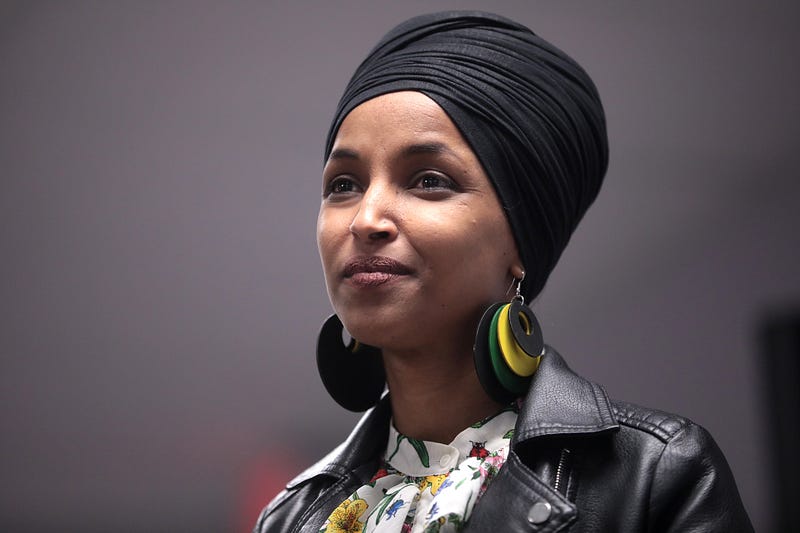
During a town hall yesterday, Rep. Ilhan Omar (D-MN) was attacked by an individual who doused the Congresswoman with an unknown liquid.
The substance turned out to be innocuous — apple cider vinegar, according to early reports. Ms. Omar was not harmed, and the suspect was quickly apprehended by law enforcement officials who sprang into action.
The attack was much more than an attack on one person. It was an attack on the civil liberties of every person who voted for Rep. Omar— and every person who didn’t.
You don’t have to agree with her politics. You don’t have to like her votes, her rhetoric, or her worldview. But attacking an elected official — especially in a public civic forum — crosses a line that a democracy cannot afford to blur.
This wasn’t an isolated incident. It fits into a growing and deeply troubling pattern in American political life: the normalization of intimidation, threats, and outright violence as a form of political expression.
We’ve seen this before. Rep. Gabby Giffords was shot in the head at a constituent event in 2011. Six people were murdered that day. More recently, Donald Trump survived assassination attempts, including a shooting at a campaign rally that killed an innocent attendee. Members of Congress have been targeted at baseball practices, followed to their homes, threatened online, and assaulted in public. The husband of a sitting Speaker of the House was nearly beaten to death with a hammer.
The assassination of Charlie Kirk.
This is not “passion.” This is not “resistance.” It is the breakdown of civic restraint.
What makes this moment especially dangerous is that public opinion is shifting. Recent polling shows something we should all find alarming: a growing number of Americans — particularly younger ones — say political violence may be justified in certain circumstances. That is not fringe thinking anymore. It’s creeping into the mainstream. And once people start believing violence is an acceptable shortcut to power, persuasion stops mattering.
That erosion has consequences. We now live in a country where public officials require security details just to attend town halls, and where credible threats have forced some high-level political figures to alter where they live or how they move in public. That is not normal. It is not healthy. And it should worry every citizen, regardless of party.
Here’s the rule we cannot afford to forget: violence is not a political argument. It is the abandonment of democracy itself.
If you oppose Ilhan Omar — or Donald Trump, or anyone else — there is a legitimate path: organize, volunteer, donate, debate, run for office, persuade voters, and accept election results. That’s how power changes hands in a free society.
The moment we excuse violence because we like the target or share the grievance, we lose the moral ground that makes self-government possible. Disagreement is American. Elections are American. Violence is not.
And if we keep pretending otherwise, we won’t recognize our republic when it finally slips away.
(Contributing writer, Brooke Bell)